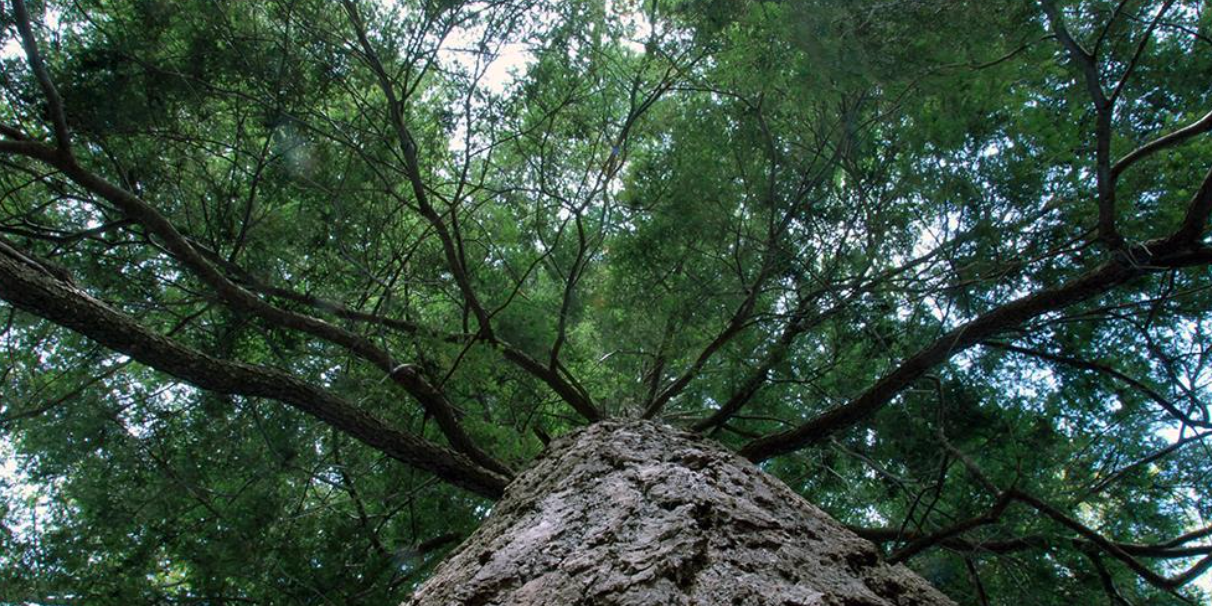
The next time you’re on a hike, look out for our state tree, the Eastern hemlock. It’s a striking evergreen conifer (a tree that has cones) that’s been an icon in Pennsylvania for thousands of years. But in recent decades, the tree hasn’t remained as sturdy; climate change experts say that warming temperatures and the influx of precipitation is exacerbating the spread of invasive species.
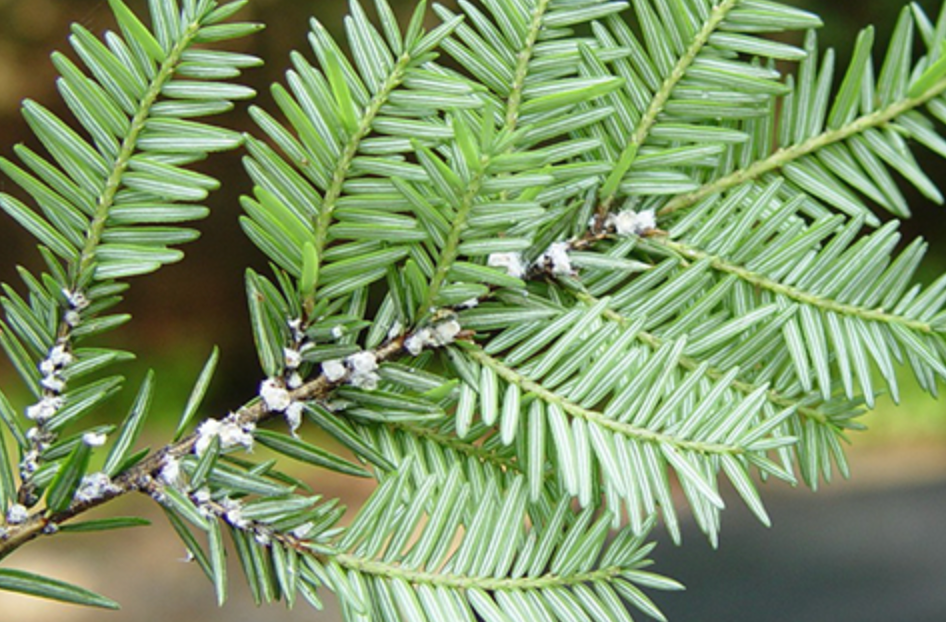
Invasive insect eggs attached to an Eastern hemlock. (dcnr.pa.gov)
The good news is that scientists are finding ways to stop invasives in their tracks. One insect native to Asia, hemlock woolly adelgid, attaches its white wooly egg sacs (adelgids) to the base of hemlock needles, and it saps the tree of nutrients over seasons. If untreated, the hemlock can die within five to 10 years. The state Department of Conservation and Natural Resources is using that window to treat trees by releasing insects or fungi that eat the adelgids.
These ancient giants, some up to 500 years old and 150 feet tall, are essential to their native communities. You can do your part to save the Eastern hemlock by notifying park managers or reporting sightings of the “fuzzy” trees to the Pennsylvania invasive map.