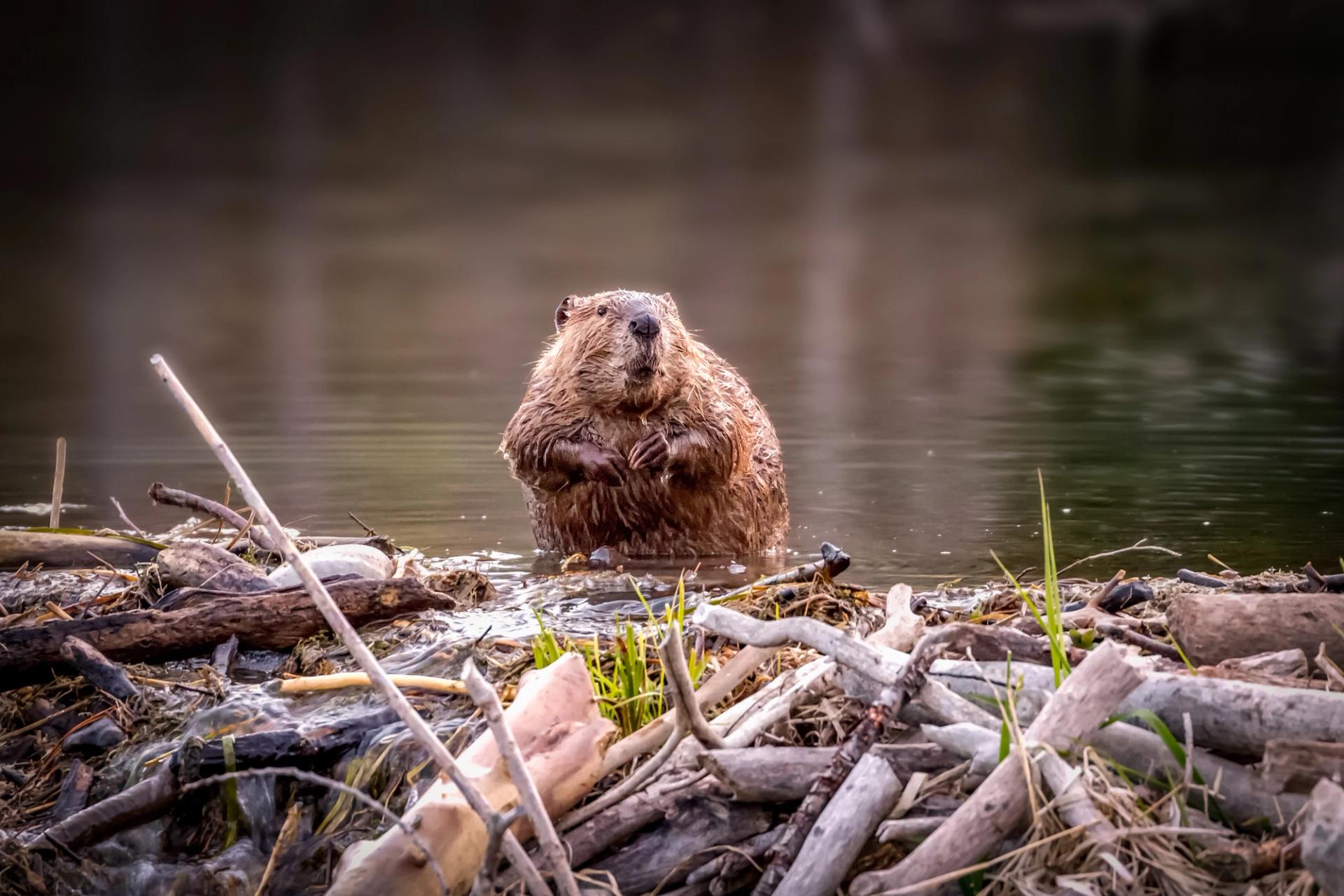
Beavers are cute, industrious, and an important part of Pennsylvania’s ecosystem, but they were once wiped off the land. Let’s explore how America’s largest rodent made a comeback in the Keystone State and where you can (safely) see one today.
We Are So Back
Before the arrival of European colonists, beavers were abundant in North America, but by the late 1800s excessive trapping and rapidly changing landscapes had eradicated the entire population in Pennsylvania. Fur pelts were a hot commodity at the time, its thick and water-repellent properties being used for the production of hats and clothing.
🤠 Side note: Stetson hats are synonymous with the West, but John B. Stetson actually started his hat business in Pennsylvania.
After the state legislature passed a law to protect beavers in 1903, the Pennsylvania Game Commission acquired a pair from Wisconsin and released them into a remote valley in Cameron County in 1917. With additional releases and conservation efforts, beaver populations were stable enough to allow for trapping by 1934. These adorable creatures are so abundant now, you might catch one making an urban abode for itself near the Golden Triangle.
A Keystone Species in the Keystone State
At 50-plus pounds, beavers are indeed the largest native rodent in the country. Beyond the “aww” factor, their dam-building greatly impacts the ecosystem around them.
Researchers in Colorado found that beaver-modified landscapes fare better in wildfires — and they’re already deploying beavers for wildfire prevention. Such is their importance that the Game Commission has a beaver management plan — a document stating that the furbearer’s environmental impact “far outweighs their economic worth.”
So important was the pursuit of the beaver as an influence in westward movement of the American frontier that it is sometimes suggested that this furbearer would be a more appropriate symbol of the United States than the bald eagle.
Encyclopedia Americana, 12:178, 1969
How to Catch a Beaver
Get a look at one, not literally catch one. You can safely see them in action in the Kids Kingdom section of the Pittsburgh Zoo & Aquarium. Though, if you find yourself in conflict with a beaver — their damming can cause flooding and tree damage — you can follow humane solutions or contact AAC Wildlife Removal for help.