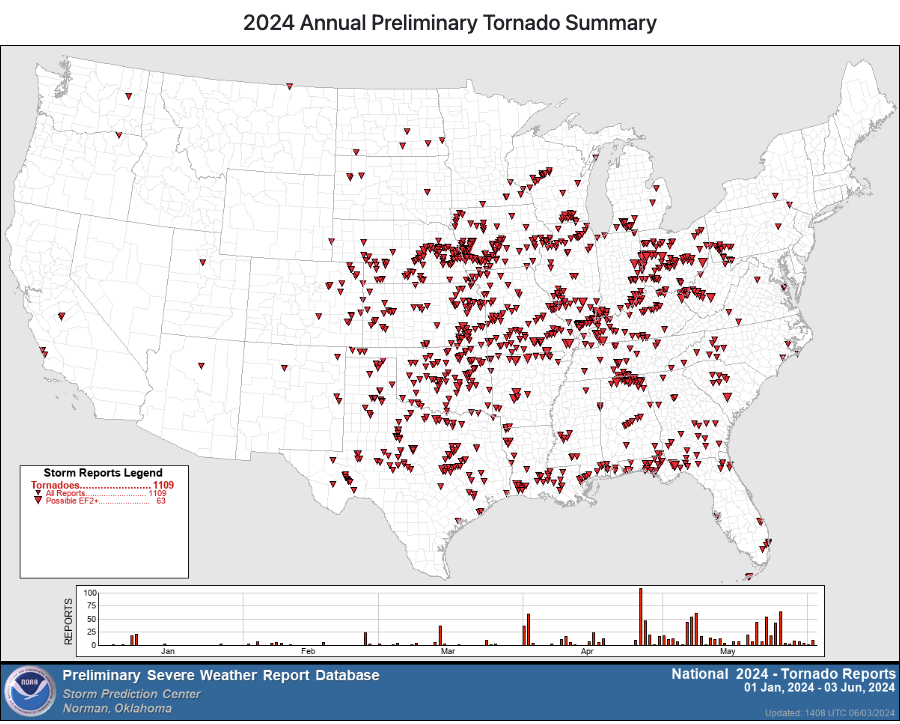
The 2024 tornado season has been the most active in U.S. history, and Pittsburgh is well into a record-breaking year.
According to the National Weather Service, more than 800 tornadoes have been reported nationwide. April alone saw at least 300 tornadoes, the second-highest since 2011. Despite these numbers, there’s some possible relief: AccuWeather predicts fewer overall tornadoes in 2024 than in 2023.
But tornado behavior is changing, which experts say could have major consequences. A larger number of tornadoes now occur on the same day or in fewer days than before and occur earlier in the spring. The “tornado alley” reference, which spanned from the Dakotas to western Colorado and down to Texas, may be outdated. The most destructive tornadoes are shifting east, such as in Illinois and Pennsylvania, and further south like in Tennessee.
While it’s not clear if climate change is contributing to these changes, what is certain is that more communities will be forced to build infrastructure and adopt new protocols to mitigate a tornado’s effects.
🌩️ Prep for the Worst
Because tornadoes can hit with little notice, experts recommend building an emergency preparedness kit, including a backup generator or batteries. Create an emergency plan and practice it.
Know where to shelter when a tornado hits. Find out if emergency shelters exist in your neighborhood, borough, or township — or consider building a safe room in your home.
Download the Red Cross Emergency App for real-time weather and emergency alerts and the FEMA App for shelter maps. Also, save this tornado preparedness checklist to help you get started.
And tornado damage doesn’t discriminate: If you struggle to find insurance coverage, look into Pennsylvania’s Fair Access to Insurance Requirements Plan.
📰 Educate Yourself and Others
Familiarize yourself with the warning signs of a tornado, and confirm if your community has a warning siren. (🎧 Many in our area don’t.) You should also talk to kids about tornadoes and involve them in practice drills.
🌪️ When a Tornado Hits
If a tornado warning has been issued, follow a local NOAA Weather Radio station for updates.
If you’re unable to make it to a city shelter, go to the basement or an inside room without windows on the lowest floor. Get under a sturdy surface and ride out the warnings. If you’re in a vehicle, drive to the closest shelter, or abandon your car and find shelter in a low-lying area.
🏠What to Do After
Stay out of damaged buildings and away from broken power and utility lines. Wear protective clothing during clean-up to protect yourself and others from disease and contamination, and document all the damage to your home for insurance purposes.
Check in with your family and neighbors, too. Provide first aid if possible until emergency response teams arrive.
And ask for help. Contact the toll-free Disaster Distress Helpline if you or someone you know could benefit from counseling.