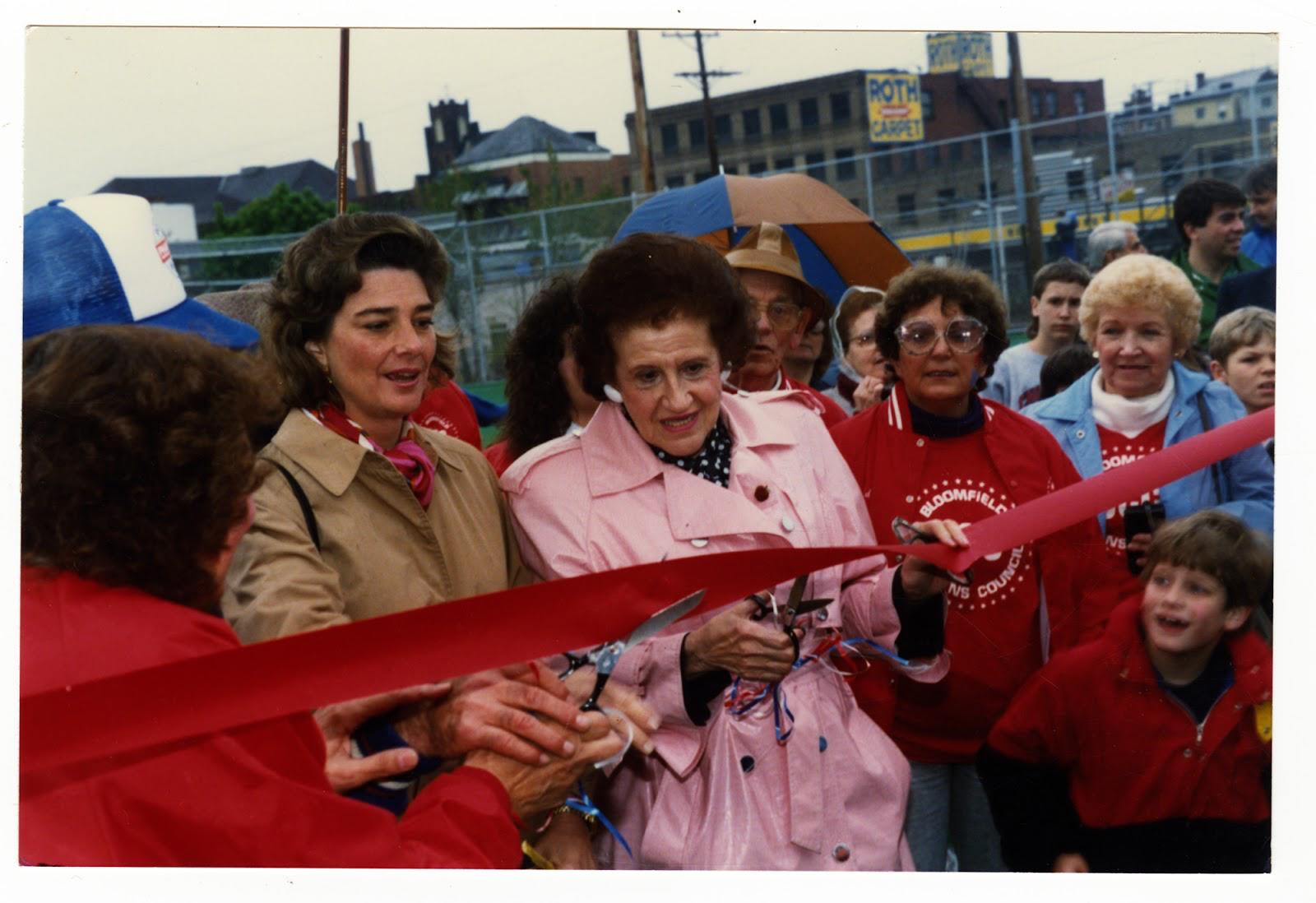
Sophie Masloff was born in 1917 in Pittsburgh's Hill District to Romanian-Jewish immigrants. She lived in Pittsburgh her whole life and had only a high school education, but rose to Pittsburgh’s highest office.
Masloff entered politics early, volunteering for local campaigns, serving as a county secretary and clerk in the Court of Common Pleas, and attending several Democratic National Conventions. She eventually won a seat on Pittsburgh's City Council in 1976. Loved ones recall political campaigns full of reminders written on her hands, a big black pocketbook, and charming, homespun malapropisms — particularly for visiting celebrities: The Who became “the How” and Springsteen was “Bruce Bedspring.” She was unpretentious, and over the years, jokingly called herself Pittsburgh’s grandmother.
In 1988, she was voted Council’s first female president. She once said her greatest accomplishment in Council was bringing cable television to Pittsburgh. But shortly into that presidency, Mayor Richard Caliguiri died unexpectedly, lifting Masloff to mayor. She won the following election and served a full term through 1994.
Though Pittsburgh had been reeling from rapid population loss and the decline of the steel industry — and as some have since reported, a true shift in identity — Masloff is remembered for far-reaching privatization efforts — including the Pittsburgh Zoo, the National Aviary, Phipps Conservatory, and more — as well as urban renewal projects, Market Square revitalization efforts, and a then-scoffed at idea for a dedicated baseball park separate from the Steelers. (Which would earn her a street named in her honor several years later.) She also signed a law barring housing, job, and service discrimination against LGBTQ people in the city.
After her term, she chose not to run for re-election but remained active in public life, appearing in commercials, commenting on city politics, and encouraging other young leaders and public servants to follow in her footsteps. She died in 2014 at age 96.
She told City Cast Pittsburgh’s Kevin Gavin in 2008: “All I want is to be remembered as having done a good job. I never lost sight of the fact that it was an incredible honor, and I thought I had to set a mark.”
Learn more about Mayor Masloff and other groundbreaking Western Pennsylvania women in the Heinz History Center exhibition, A Woman’s Place: How Women Shaped Pittsburgh.