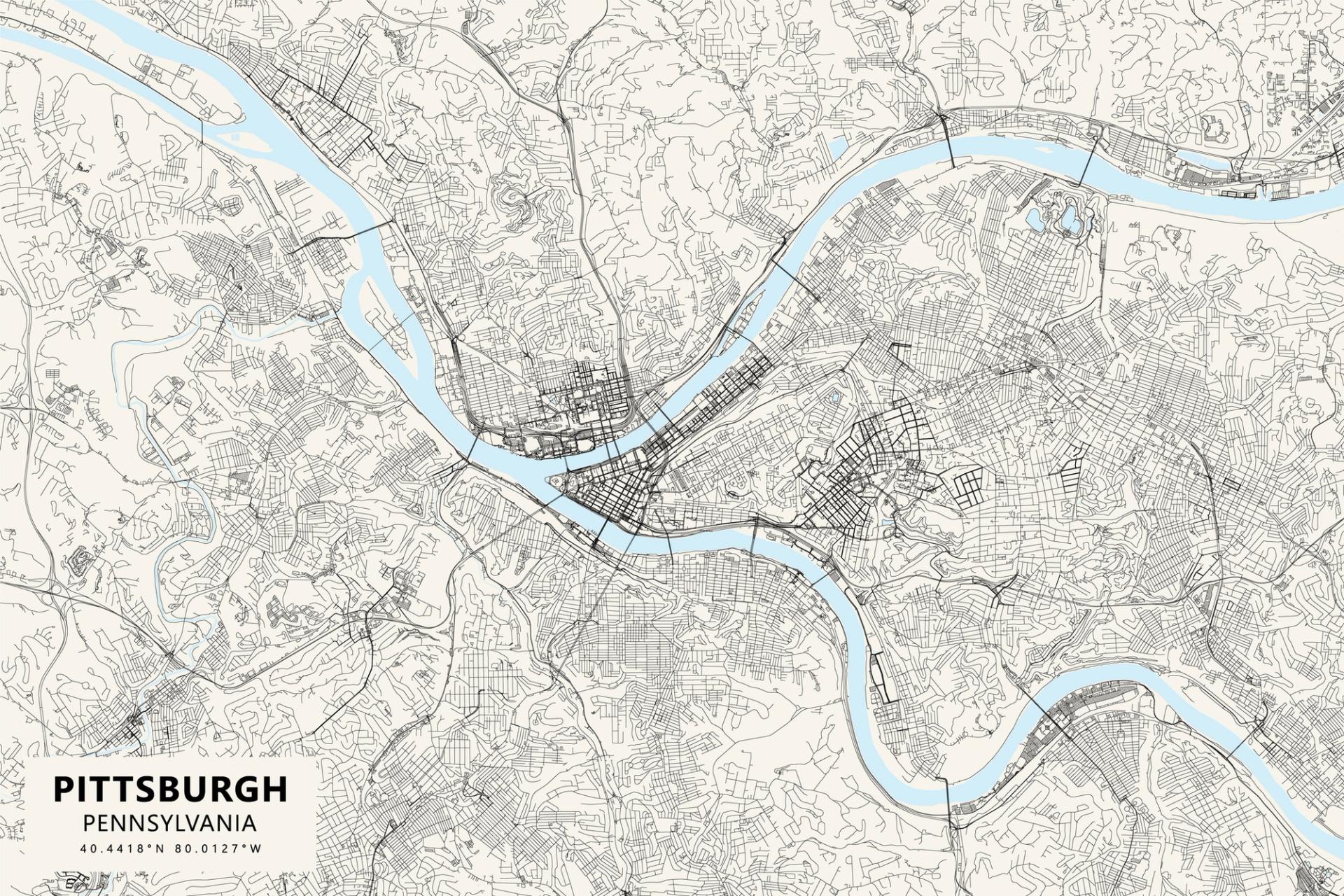
The Allegheny, Monongahela, and Ohio rivers are Pittsburgh’s life force, a flow of natural and economic resources. But you can’t say the names of our three rivers without hearing — and honoring — their Indigenous roots.
The City of Pittsburgh was built on the ancestral land of the Seneca, Adena culture, Hopewell culture, and Monongahela peoples. These Indigenous groups were later joined by other tribes, like the Lenape, Shawnee, and Mingo, who were forced from their homelands by European colonists.
The Allegheny River name may have multiple roots.
- “Alleg” descends from the Lenape word “welhik,” which means “good, fine.”
- The “heny” in Allegheny resembles “hanna” in Susquehanna River, which comes from the Lenape word “hanne,” meaning “stream, river.”
- A Susquehanna River Basin Commission report also notes that “Allegheny” means “’Stream of the Alligewi” in the Algonquian language. Alligewi is an ancient Native American tribe.
The Monongahela River comes from the Lenape word meaning “falling banks,” like the muddy banks that erode along the river.
The Ohio River is derived from the Seneca word “ohi-yo,” meaning “great river” or “beautiful river.”
Learn more local Indigenous history with our latest Pittsburgh Pop Quiz.