Pittsburgh was the epicenter for steelmaking in the first half of the 20th century, not just for the nation but for the entire world. At the time, Pittsburgh’s many steel plants were forging 60% of America’s entire steel output.
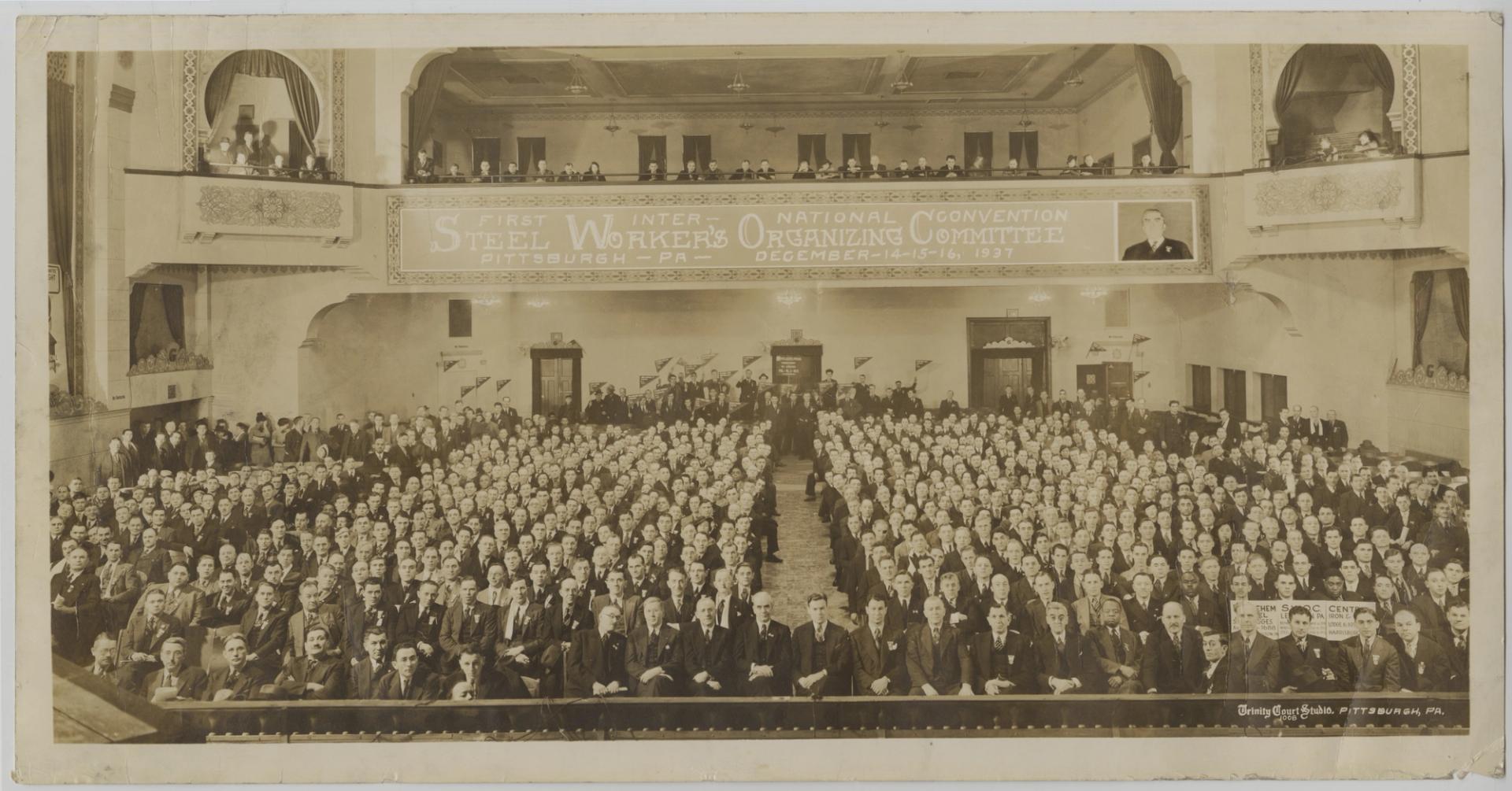
The city was also the foundry for organizations that would stand up for the workers who built a nation. Many steel towns had local unions, but on June 17, 1936, leaders of the Congress of Industrial Organizations (CIO) met in Pittsburgh and formed the Steel Workers Organizing Committee (SWOC) with Philip Murray as chairman.
Murray’s labor of love was to get industry recognition for steelworkers across the country. U.S. Steel had resisted unionization of its workers for decades, but nine months after SWOC was formed, the steelmaking giant recognized it as a legitimate bargaining agent. Two weeks later, the company and the union signed their first contract.
Nearly six years later, the Amalgamated Association of Iron and Steel Workers merged with the United Steelworkers of America, which currently has 1.2 million members across several industries.
Now, more than eight decades after that historic first contract, the USW is fighting U.S. Steel’s planned sale to Japanese steel giant Nippon for $14 billion.
Learn more about our union history on the City Cast Pittsburgh podcast.