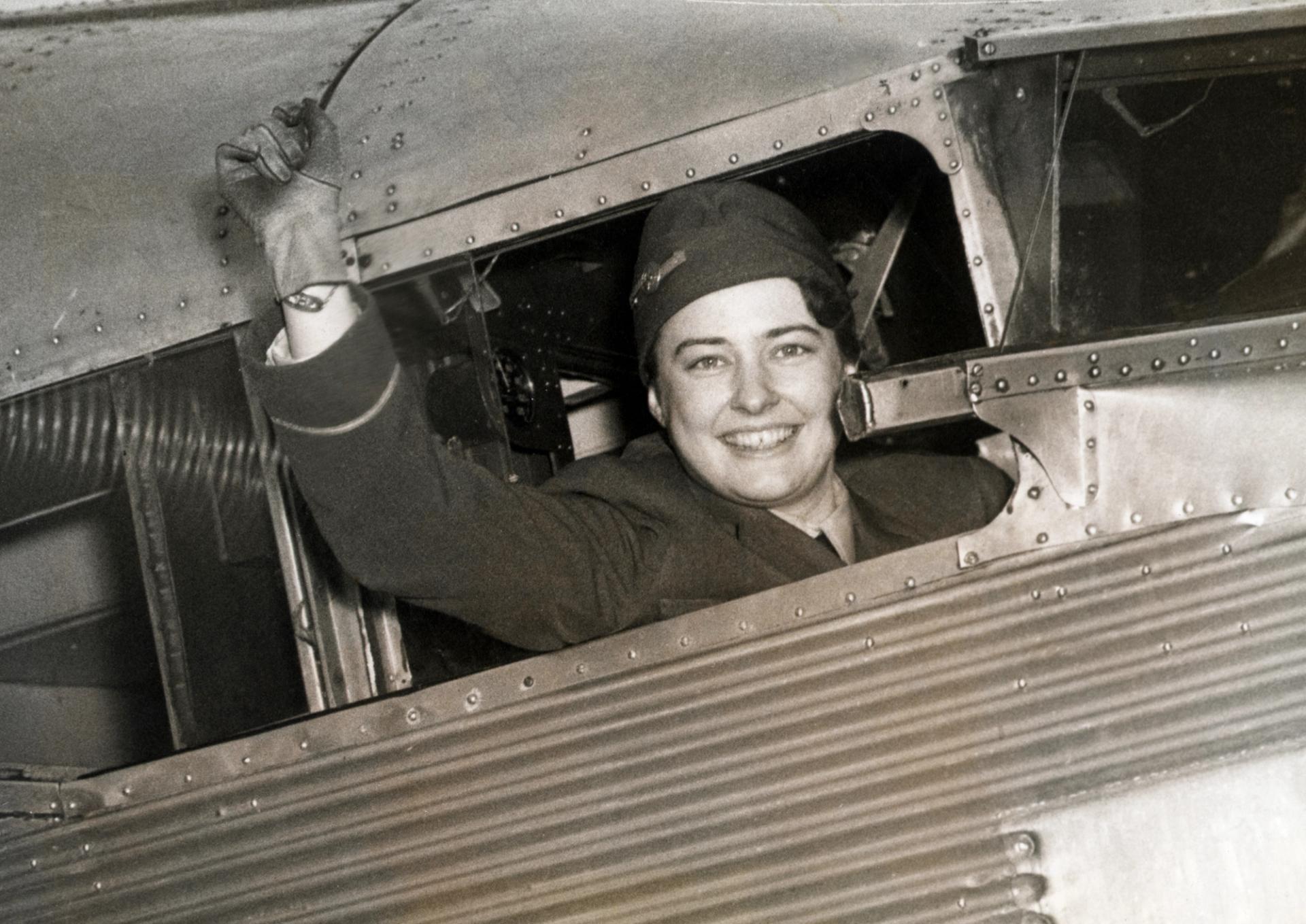
When you think of pioneering women in aviation, Amelia Earhart might first come to mind. But another woman who was dominating the skies and making a name for herself at the beginning of the 20th century was born right here in Allegheny County.
Helen Richey was born in McKeesport on Nov. 21, 1909. She was drawn to aviation early on, convincing her father to help her enroll in flying school when she was about 20 years old. Aviation was male-dominated at the time, which hasn’t changed much a century later, but Richey was determined. She told The Pittsburgh Press in 1939 that boys in her classes were skeptical, so she “studied twice as hard so I wouldn’t give them that pleasure.”
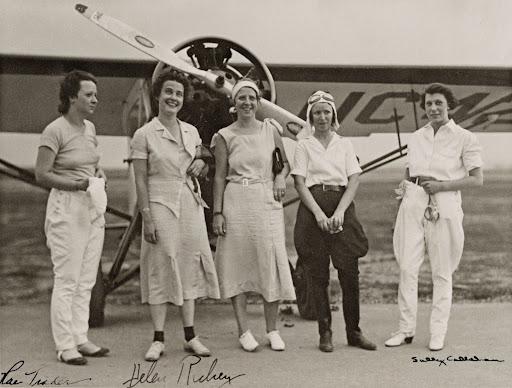
Helen Richey (second from left) and her crew in 1933 at Bettis Field in West Mifflin. (Courtesy of Helen Stinner Ball and Barbara Ball Ewing via the Heinz History Center)
Richey had a career full of accolades and challenged gender norms throughout her career. In 1933, Richey set an endurance record with another female pilot by staying airborne for nearly 10 days over Miami. In 1934, she won the National Air Meet for women in Dayton, Ohio. In 1936, she teamed up with Earhart to take fifth in the Bendix Trophy race. During World War II, she ferried airplanes in the U.K. and was a member of the Women Airforce Service Pilots.
Richey’s most well-known accomplishment was in 1934 when she became the first female pilot hired by a U.S. commercial airline, Central Airlines. Richey resigned after 11 months due to discriminatory behavior from management, male pilots, and the Bureau of Air Commerce.
Tragically, Richey died in her New York City apartment on Jan. 7, 1947 from a pill overdose. She was 37 years old, and newspaper reports at the time suggest she’d been receiving treatment for depression. Richey was posthumously awarded the Congressional Gold Medal in March 2010, and a historical marker in her honor can be found in her hometown.
Learn more about the immeasurable impact Western Pennsylvania women have made on our region and the world in the Heinz History Center’s exhibition, A Woman's Place: How Women Shaped Pittsburgh.