
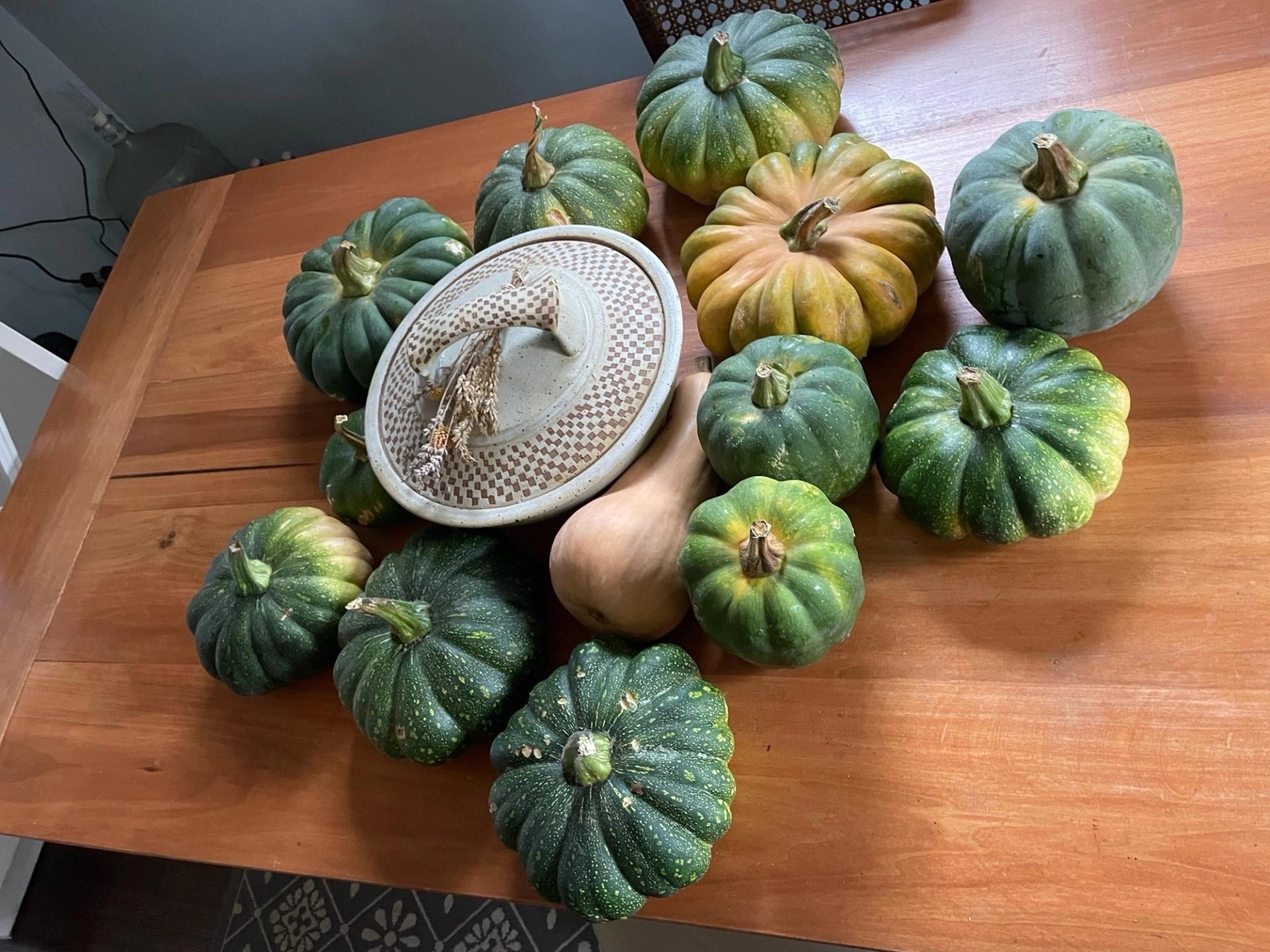
Every fall season, Jordan Tony and Silvan Goddin’s Pittsburgh home is adorned with pumpkins, different varieties of corn, nuts, and dozens canned and dried goods.
“We really like this time of year because the abundance comes inside from our garden to decorate our house, and then we get to cook with it all winter,” Goddin says.
Through their Instagram and TikTok @homegrown_handgathered, the couple teaches their hundreds of thousands of followers low-cost methods of producing foods in an urban and suburban environment. Plus, they share their quest to live off the land and avoid shopping at the grocery store. So far, three months has been their longest stretch!
City Cast Pittsburgh sat down at Jordan and Silvan’s bountiful local table to learn about their favorite spaces to grow, forage, and hunt in Pittsburgh — plus tips for beginners.
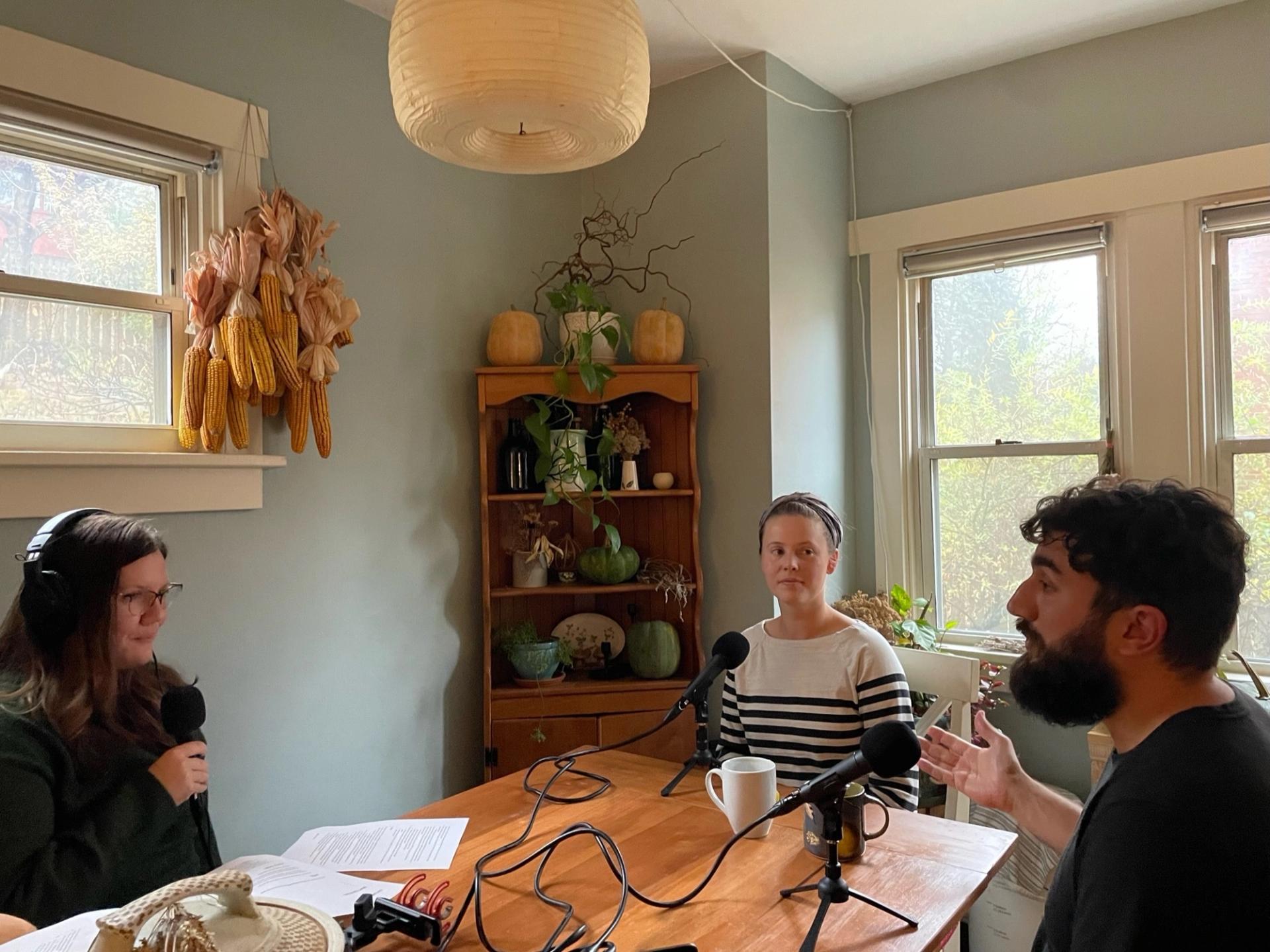
City Cast Pittsburgh host Megan Harris interviews Jordan Tony and Silvan Goddin of @homegrown_handgathered. (Sophia Lo / City Cast Pittsburgh)
Start With a Low-Maintenance Crop
“It’s not all or nothing… any food that you can produce for yourself is important,” Jordan says. Pumpkins are a great crop to start with, because they are easy to grow in Pittsburgh — the couple has vines along the steep hillside in their front yard — and they cure themselves.
Forage for Fruit and Nuts
There’s a lot to forage in Pittsburgh, if you keep your eyes peeled! The pair keep baskets in their car and pick apples from the tree near their neighborhood coffee shop and berries and wild cherries in Frick and Boyce parks. Plus, they crack open those green, tennis-ball looking husks you can find in woods all over town to get the delicious Black Walnuts inside.
Practice the ‘Honorable Harvest’
Showing gratitude to the land is a long tradition for Indigenous people, and Jordan and Silvan encourage growers and foragers to carry on that practice — never take everything, and give a little bit of harvest back to the ground for every bit you take.
This could be “spreading the seeds, removing invasive species, or helping to create a habitat for animals and plants to survive in the areas around us. And in that way, they then support us,” Jordan says.
It’s all about “knowing what you’re harvesting and its role in the ecosystem,” Silvan says.
Take an Intro Course
Silvan and Jordan created two online courses to get you primed on gathering and foraging your food — and you can get a 20% discount with the code “CityCast412.”
For hunting, which can be a little more intimidating for beginners, Jordan suggests entering a mentorship program like Hunters of Color.