
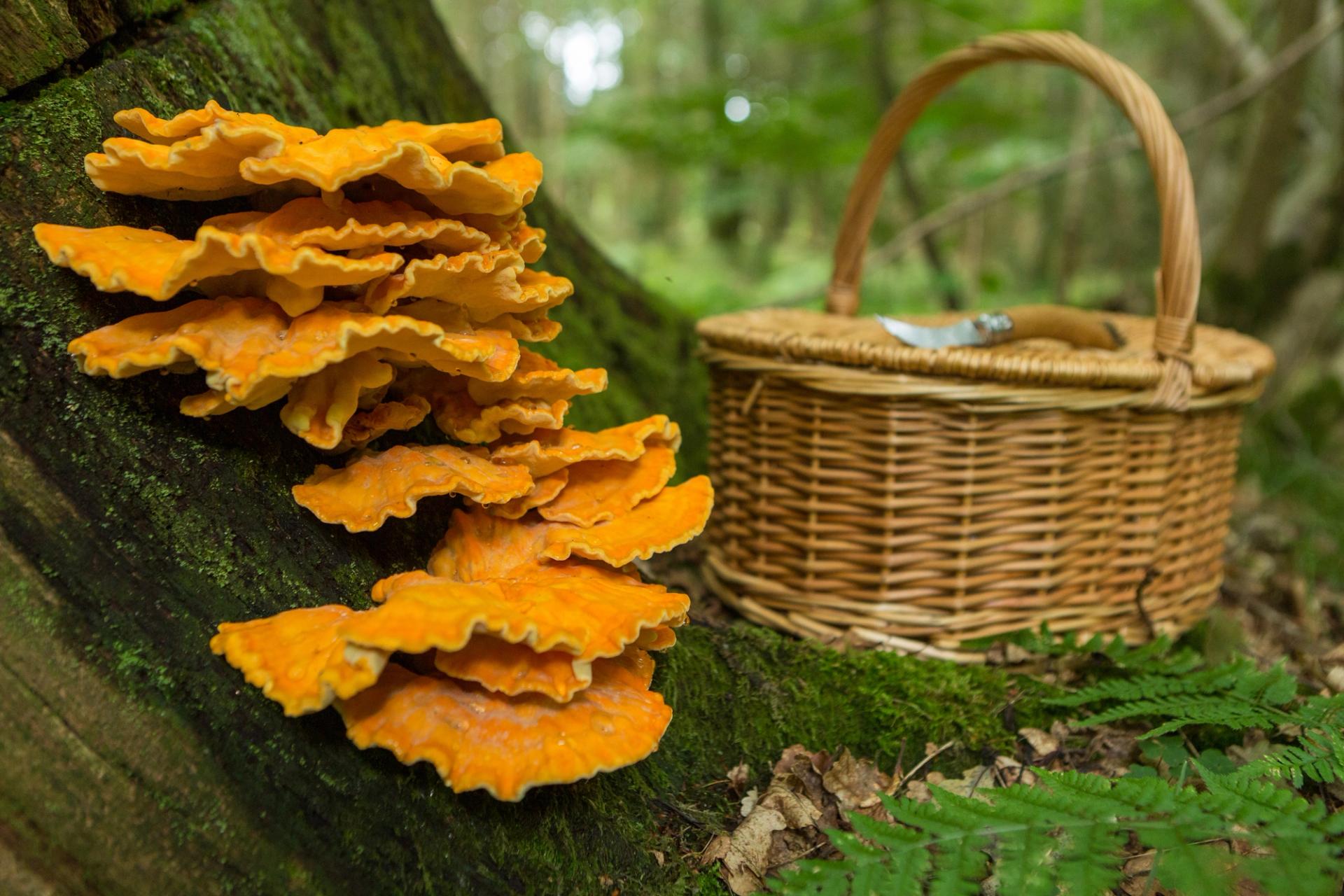
Want to get to know the fungus among us? Pennsylvania is the leading producer of mushrooms in the U.S. — the official “mushroom capitol” is in Chester County outside Philly — but Pittsburgh is also a great place to forage for fungi. Esperanzo Wilcox of the PA Mushroom Co. gave us a beginner’s guide on the City Cast Pittsburgh podcast, plus species lookalikes to watch out for.
“It's so intriguing, because there's just so much nuance and detail within each layer, right? For every question, it just gets deeper and deeper and deeper,” Wilcox says. “Foraging is a skill that comes over time.”
When to Forage
Mushrooms are nature’s hydrometer, Espo says. So in Pittsburgh, that means heavy rains like we’ve experienced lately are key to creating the perfect conditions. Many mushroom varieties thrive through spring and summer — if you know where to look!
Tools of the Trade
If you plan to harvest, rather than just observe, make sure you pack a clean knife or scissors. Espo recommends a small bag with a magnifying glass, parchment paper to wrap your finds, and a camera, notebook, or pen to capture any special moments. He’s also a big fan of taking a little makeup brush with the bristles cut down to clean his mushrooms as he gathers them. “It can get a little muddy and, you know, a little dirty,” he says, “so it's just best to clean as you harvest rather than collect everything and load it all up and then go back and clean.” A bottle of water, snacks, and a backup charger for your phone battery can come in handy, too.
Where to Go
Tree identification can be key to finding mushrooms and feeling confident that what you’ve found is, in fact, safe to eat. Espo suggests linking up with the Western PA Mushroom Club or another group for your first few outings. Anyone can find mushrooms, he says, but you may find that you enjoy the taxonomy more than edibility — or maybe photography, drawing, or wayfinding suit you best. “There’s all different skill sets,” Espo says. “Your personal interests can lead you as far as you want to go.”
Wherever you choose, harvest responsibly and make sure you have the proper permissions. State parks, forests, and game lands are, well, fair game! And so are lots of other public spaces. If you suspect an area on private land might be a great spot to forage, ask the landowners first.
Safety First
Never forage from a site likely to be tainted by pesticides or pollutants. “Mushrooms are sponges, essentially, so you want to harvest them from the most pristine places possible if you're going to be consuming them,” Espo says. Never eat anything you aren’t certain about, cook all mushrooms you find, and consider the buddy system if you’re going into an unknown area to forage. Espo often had a buddy accompany him who would stand on the trail while he wandered away, looking for telltale signs. They could keep talking to one another, ensuring Espo never got lost. But if you do lose your way, stay calm and listen closely to your environment. Espo says he once found his way out of the woods by listening for the sound of cars until he was able to pop back out onto a road.
Feeling ready? Here are Espo’s favorite varieties in Western Pennsylvania.
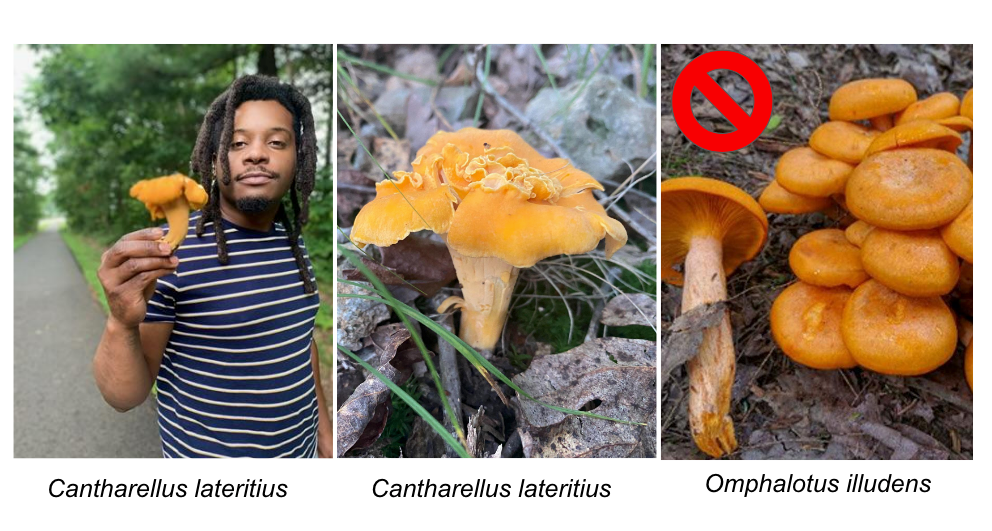
Chanterelles compared to their look alike mushrooms. (Photos courtesy of Kristan Heart, Esperanzo Wilcox, and Tradd Cotter)
Chanterelle
Chanterelle, or Cantharellus lateritius, are prevalent on logging roads, trails, and disturbed soil. You can find these mushrooms from May to July, though you could get lucky in August. Look for their yellow caps and a white interior. These mushrooms often have an apricot-like smell.
Look out for lookalikes: Omphalotus illudens, also known as jack-o'-lantern mushroom. These are bright orange and usually grow in clusters while chanterelles grow individually.
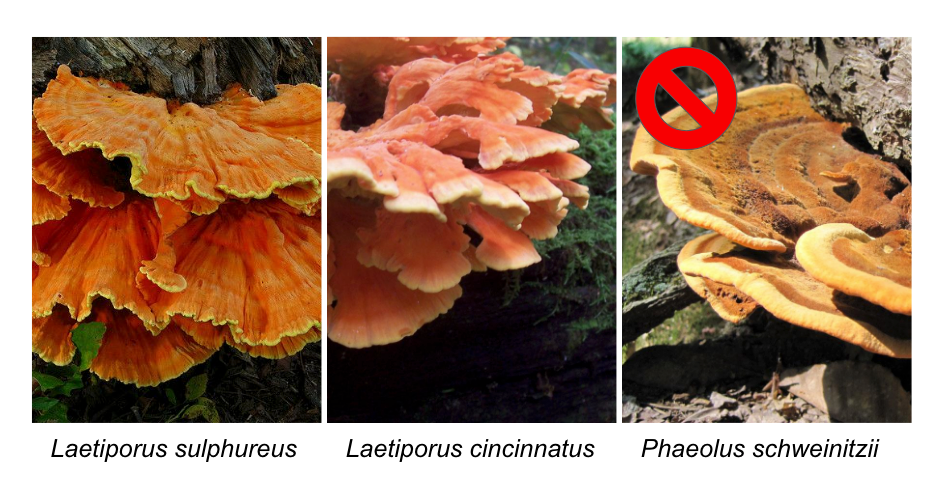
Don’t mistake chicken of the woods with their lookalike, which also grows on trees. (Photos courtesy of Esperanzo Wilcox and Wikimedia Commons)
Chicken of the Woods
Chicken of the Woods, or Laetiporus sulphureus and Laetiporus cincinnatus, can be found on dead and decaying trees during spring and summer. They’re identified by their overlap caps, and they grow like they’re on a shelf. Laetiporus sulphureus has a yellow underside, and Laetiporus cinninatus has a white one.
Look out for lookalikes: Phaeolus schweinitzii, also known as dyer’s polypore.
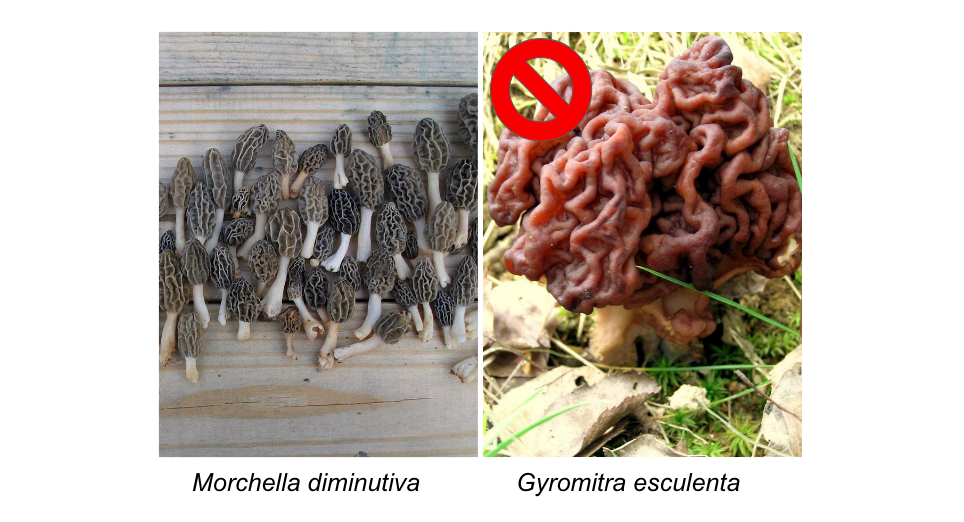
Be aware of the famous morel mushroom’s doppelganger. (Photos courtesy of Wikimedia Commons and Tradd Cotter)
Morel
Look for Morchella diminutiva in early spring around elm, slippery elm, poplar, cherry, and sycamore trees. Morels can be harder to find, but they are highly coveted. And after all the rain the last few weeks, Espo says Pittsburgh could be a forager’s paradise!
Look out for lookalikes: Gyromitra esculenta, also known as false morel or turban fungus.
Learn More!
Join the the PA Mushroom Co. for a beginner’s mushroom hike in Cooks Forest on May 11, or dig into these resources:
- National Audubon Society Field Guide To Mushrooms by Gary H. Lincoff
- Appalachian Mushrooms: A Field Guide by Walter E. Sturgeon
- Mushrooms of the SouthEast by Todd F. Elliott & Steven L. Stephenson
- Mushrooms of Northeastern North America by Alan E. Bessette, Arleen R. Bessette & David W. Fischer