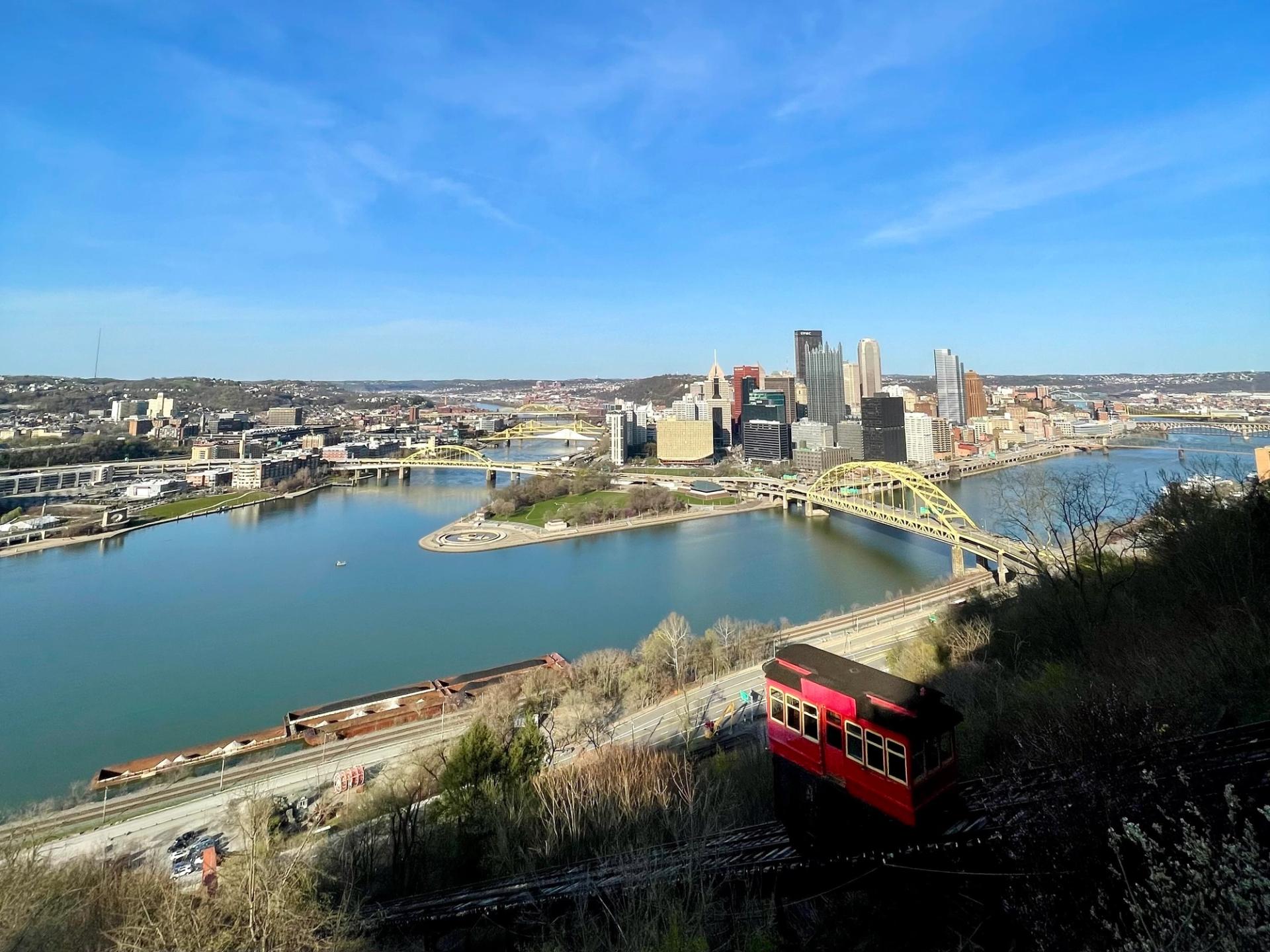
The three rivers drop out below you and Pittsburgh’s skyline appears as you glide upwards by way of Mt. Washington’s funicular railways. With gilded ceilings, windows into century-old mechanics, and miniature museums at both stations, the city's beloved inclines help elevate visitors into the history of this classic Pittsburgh experience.
⛰️ The Innovative Pull
When Mt. Washington was known as Coal Hill, workers in the factories beside the Monongahela River would trudge up the twisting paths created by the Seneca, Shawnee, and Iroquois tribes. Along with Pittsburgh’s industrialization and the accelerated mining came the need for more powerful transportation to accommodate the influx of steelworkers and the supply of mined rock.
🚂 At Their Peak
For a stretch of Pittsburgh’s history, over a dozen funicular railways — two counterbalanced cars linked by a cable along a steep track — dominated the cityscape. Though initially used only for heavy freight loads, these pulley systems soon carried Pittsburgh’s hilltop residents along their tracks using steam engine power, and some even had curves!
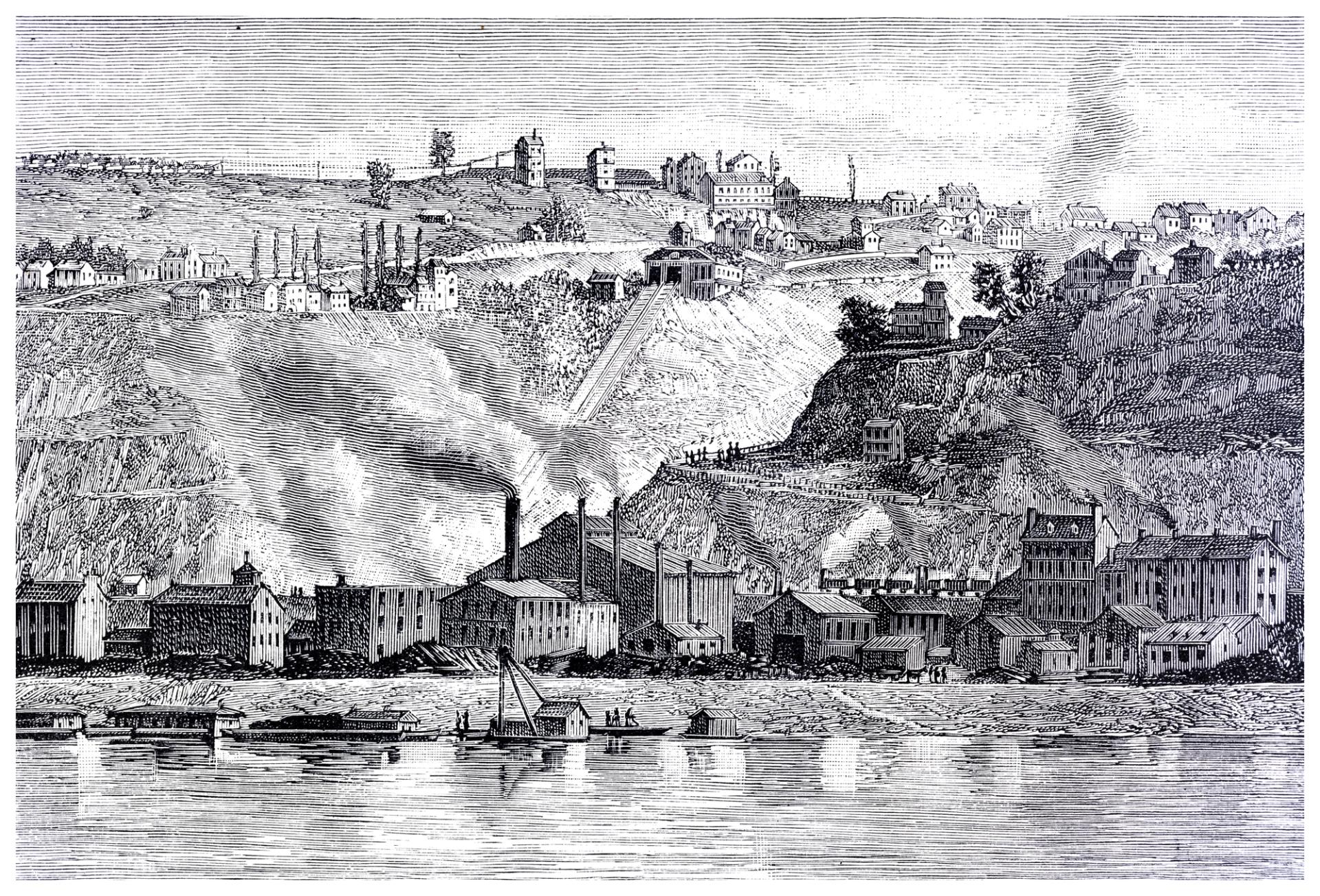
An illustration of Pittsburgh’s Coal Hill (now Mt. Washington) from 1886. (Grafissimo / Getty)
🚟 An Uphill Climb
As modern technology (mostly cars) arrived, Pittsburgh’s funicular systems became obsolete and were dismantled. That is, until repair costs threated to close the Duquesne Incline in 1962. Pittsburgh residents, recognizing the rail as an integral part of the city’s history, raised the money to keep it from decline.
🎆 To The Summit
Now residents and history lovers alike can pay exact cash (or tap a ConnectCard) to ride one of the last remaining funicular rails in Pittsburgh: the Duquesne and Monongahela Inclines — provided they’re working that day.
At the top, take in the Pittsburgh skyline or explore the neighborhood of Mt. Washington, grabbing some of Grandview Bakery’s cookies and shopping for local artisan crafts from Love, Pittsburgh — if you’re so inclined!