An unusually early heat wave shattered temperature records across the country this summer, earning the name “the heat dome.” We city dwellers have it worse due to something called the urban heat island effect, which causes urban areas to be 1 to 10°F higher than their surroundings.
What Causes the Heat Island Effect?
Buildings, roads, and cars all absorb and re-emit the sun’s heat far more than natural landscapes. Trees, water, and vegetation naturally cool the air by providing shade and evaporating surface water.
Vehicles, air-conditioning, and industrial facilities all emit heat in cities, too. Plus, the structure of the city itself matters. Cities with narrow streets and tall buildings become urban canyons, blocking natural air flow that would otherwise cool it down.
Heat Island Impacts
Besides the discomfort of living in a constant state of sweat (or is that just me?), heat islands also harm the environment. Higher temperatures mean more air-conditioning, higher energy consumption, and more greenhouse gas emissions. The heat is also a serious threat to unhoused people and disproportionately affects low-income populations.
How To Avoid the Heat in Pittsburgh
- 🏢 Limit your concrete: Pittsburgh’s hottest neighborhoods like Downtown, the Strip District, and parts of the North Side and South Side all have something in common — fewer trees and lots of buildings and asphalt.
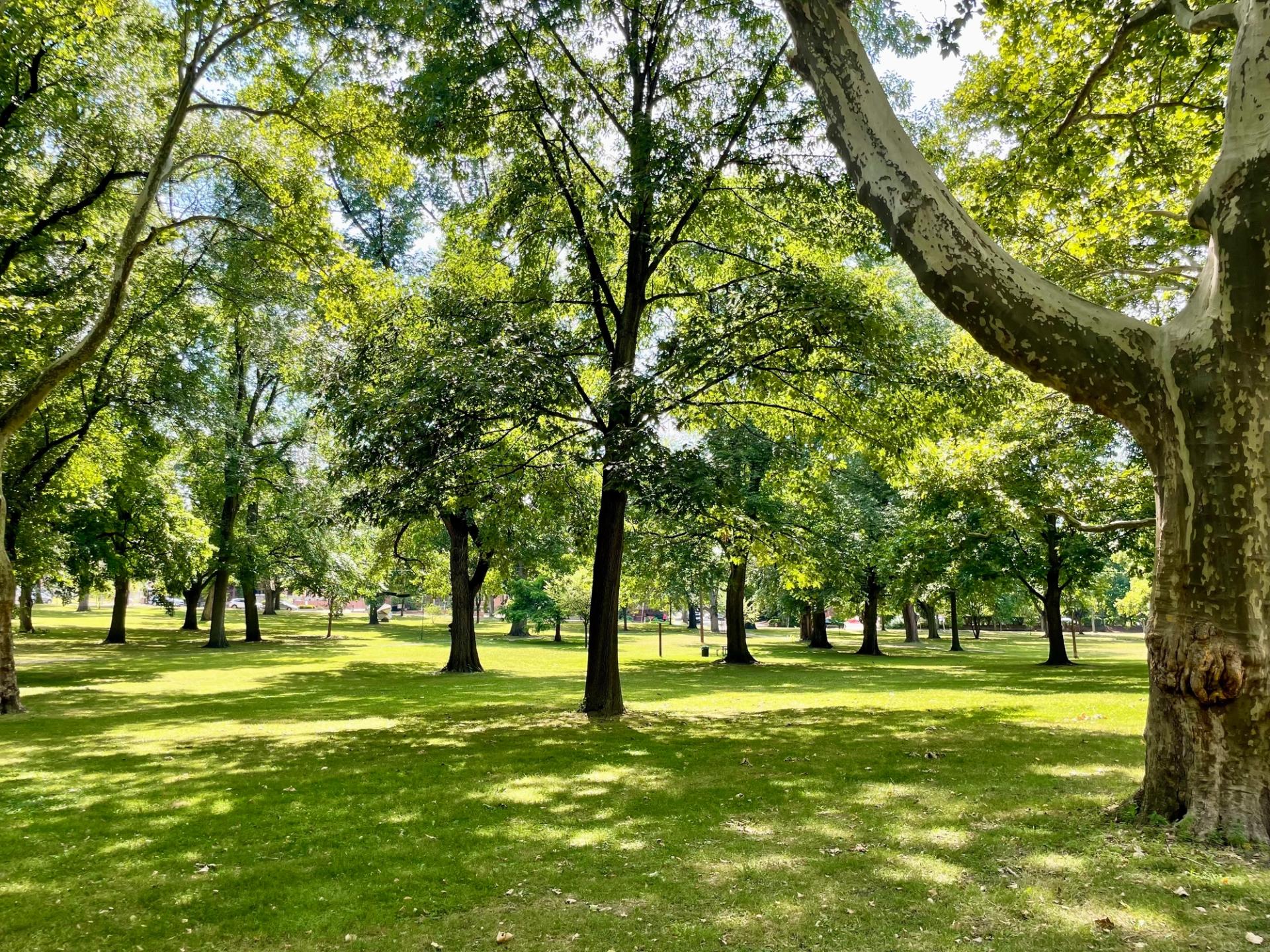
- 🌳 Get to a green space: Dense tree coverage and grass mean temperatures could be up to 10 degrees cooler. Pittsburgh and Allegheny County have tons of parks to choose from, but Frick, Riverview, and Deer Lakes parks are especially good bets for lots of shade.
- 🏊 Take a dip: Pittsburgh has so many great public pools that one intrepid swimmer even ranked them. If swimming isn’t your thing, you can also check out a spray park or some of Pittsburgh’s coolest locations and activities (strictly temperature speaking).
- 🌴 Make your own oasis: The best way to mitigate the heat island effect is to increase plant and vegetation cover. Consider planting something from one of Pittsburgh’s garden shops, or look into long-term strategies like green roofs or cool pavement technologies.