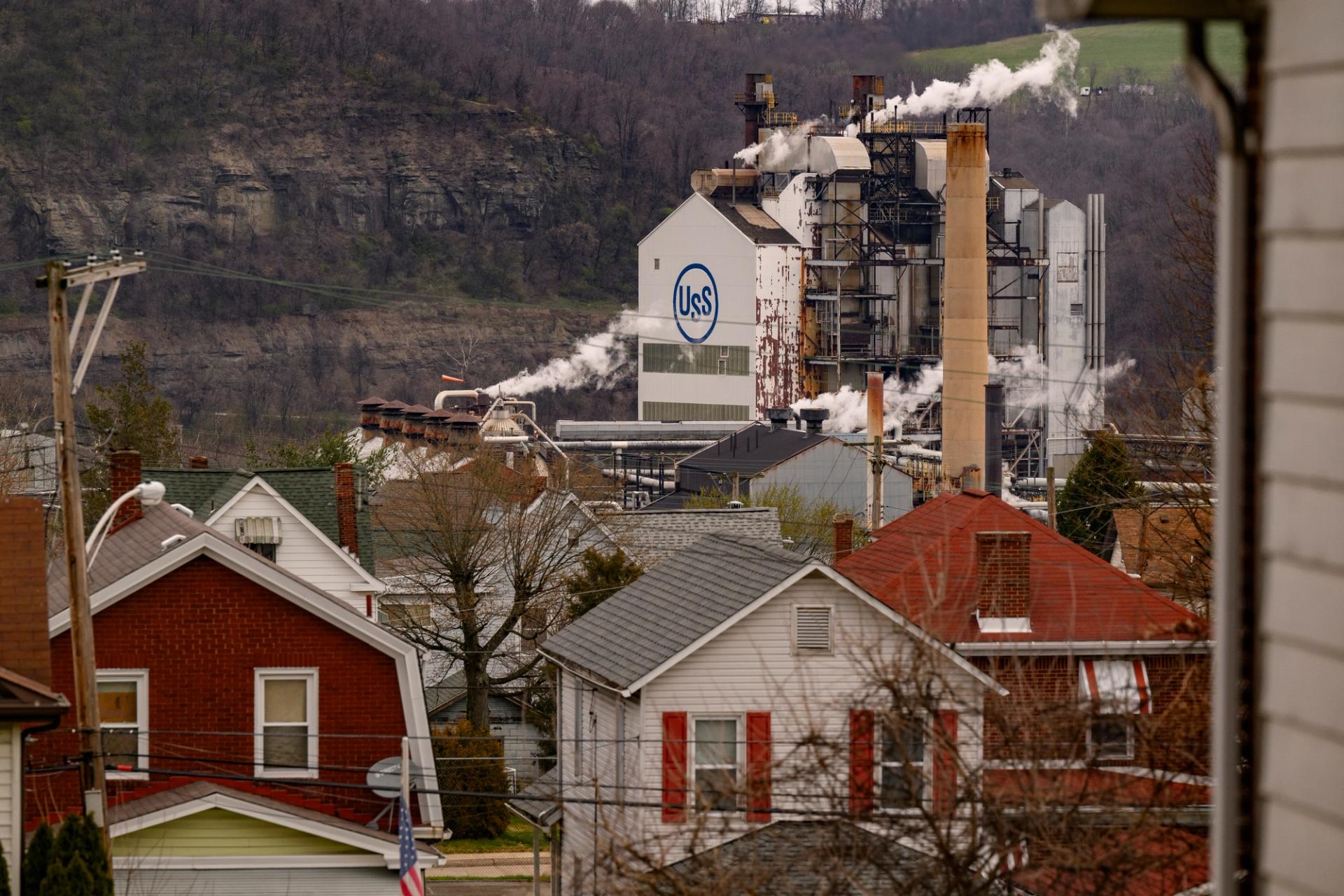
President Joe Biden has blocked a nearly $15 billion sale of one of Pittsburgh's most iconic companies, leaving in doubt now whether U.S. Steel will remain in our region at all.
If you’re new to this saga, here’s what was on the table:
- Over a year ago, Japanese-owned Nippon Steel agreed to pay $14.1 billion in cash to acquire Pittsburgh-based U.S. Steel, which entertained separate offers in 2023 from Ohio-based Cleveland Cliffs and Pittsburgh’s Esmark, Inc. U.S. Steel shareholders approved the Nippon deal in April.
- When the United Steelworkers union full-throatedly opposed it, Nippon sweetened the pot, offering an additional $1.3 billion to clean up the blast furnaces at the Mon Valley Works in Clairton, Braddock, West Mifflin, and Fairless Hills. The union claimed to have been “blindsided” by U.S. Steel management and said that Nippon was “unlikely to honor the union’s contracts and protect worker pensions.”
- For its part, Nippon promised to honor existing bargaining agreements, create a workforce training center in Western Pennsylvania, and give the U.S. government veto power over cuts in production capacity for the next decade.
- The federal Committee on Foreign Investment in the United States (CFIUS) was tasked with reviewing the deal for possible risks to national security, but failed to reach a consensus. Biden promised to reject the deal before they began. CFIUS filed its report Dec. 23; Biden had 15 days to make his decision.
- Nippon, meanwhile, said they’d wait until March to finalize if the deal could go through.
If any of this sounds familiar, it’s because you’ve probably heard about it all over town. U.S. Steel executives went on a public campaign last year alongside Nippon leadership to sway union members, powerbrokers, and regular Pittsburghers. Their pro-merger messages blanketed local airwaves, including ads during Steelers games and even here on City Cast Pittsburgh.
For some, it seemed to work. While union leadership and lawmakers like Biden, Sens. Bob Casey and John Fetterman, and Rep. Chris Deluzio, whose district includes U.S. Steel facilities, opposed the deal, many rank-and-file members suggested it may be the best path toward keeping the company financially solvent AND still headquartered in Pittsburgh over the long haul. A few hundred union members even rallied Downtown in September, and a faction of local mayors produced their own commercial in support of the merger.
Critics have argued that opposition was less about national security — Japan has long been a U.S. ally — and more about the optics of selling a company bearing a distinctly American legacy. One mill worker said Friday, “If we were named anything else but U.S. Steel, this deal would have been approved months ago.”
Biden said in his White House statement: “It is my solemn responsibility as President to ensure that, now and long into the future, America has a strong domestically owned and operated steel industry that can continue to power our national sources of strength at home and abroad; and it is a fulfillment of that responsibility to block foreign ownership of this vital American company. U.S. Steel will remain a proud American company. … We need major U.S. companies representing the major share of U.S. steelmaking capacity to keep leading the fight on behalf of America’s national interests.”
Here’s what everyone else is saying:
- The United Steelworkers union applauded President Biden’s “bold action.” Leadership said in a statement, “Moving forward, we’re confident that with responsible management, U.S. Steel will continue to support good jobs, healthy communities and robust national and economic security well into the future.”
- U.S. Steel executives threatened in September to leave Pittsburgh altogether if Biden blocked the deal. In a joint statement issued Friday, U.S. Steel and Nippon Steel argued Biden’s statement failed to present “any credible evidence of a national security issue, making clear that this was a political decision” and that the two companies “are left with no choice but to take all appropriate action to protect our legal rights.” Both maintain Nippon was the only partner “willing and able” to make necessary investments to protect and grow the company. “In short, we believe that President Biden has sacrificed the future of American steelworkers.”
- Gov. Josh Shapiro said the matter is far from over. “I expect U.S. Steel to uphold their commitments to Western Pennsylvania, refrain from threatening the jobs and livelihoods of the Pennsylvanians who work at the Mon Valley Works and at U.S. Steel HQ and their families, and work collaboratively to ensure the future of American steelmaking takes place right here in our Commonwealth. I also expect any other potential buyers to demonstrate the strong commitments to capital investment and protecting and growing Pennsylvania jobs that Nippon Steel placed on the table during my continued dialogue with their leadership.”
- Lt. Gov. Austin Davis, who is from Pittsburgh and grew up near U.S. Steel facilities, said: "Now that President Biden has blocked this deal, we need to find a long-term plan for keeping steel production in the Mon Valley and protecting Pennsylvania workers' livelihoods. No more statements and fired-off social media posts – the workers and their families need to hear a plan.”
- Allegheny County Executive Sara Innamorato, who has declined to publicly weigh in on the deal, said “ownership should [be] invested in the workers and honor the collective bargaining agreements now and in the future.”
- Allegheny Conference CEO Stefani Pashman said the deal would have benefited the region’s economy and environment and should’ve been embraced. “Choosing to walk down an uncertain path when a viable and highly beneficial deal is on the table is the wrong decision by the Biden administration.” The conference is an economic development group representing our 10-county region.
Nippon has already complained of the White House’s “impermissible influence” in the CFIUS process and signaled a lawsuit against the federal government could follow.
President-elect Donald Trump, who returns to office Jan. 20, has said he also opposes the deal.
Want to learn more?
Check out the history of the United Steelworkers, how a former blast furnace became an event space, and how Pittsburgh helped spark the labor rights movement in America.