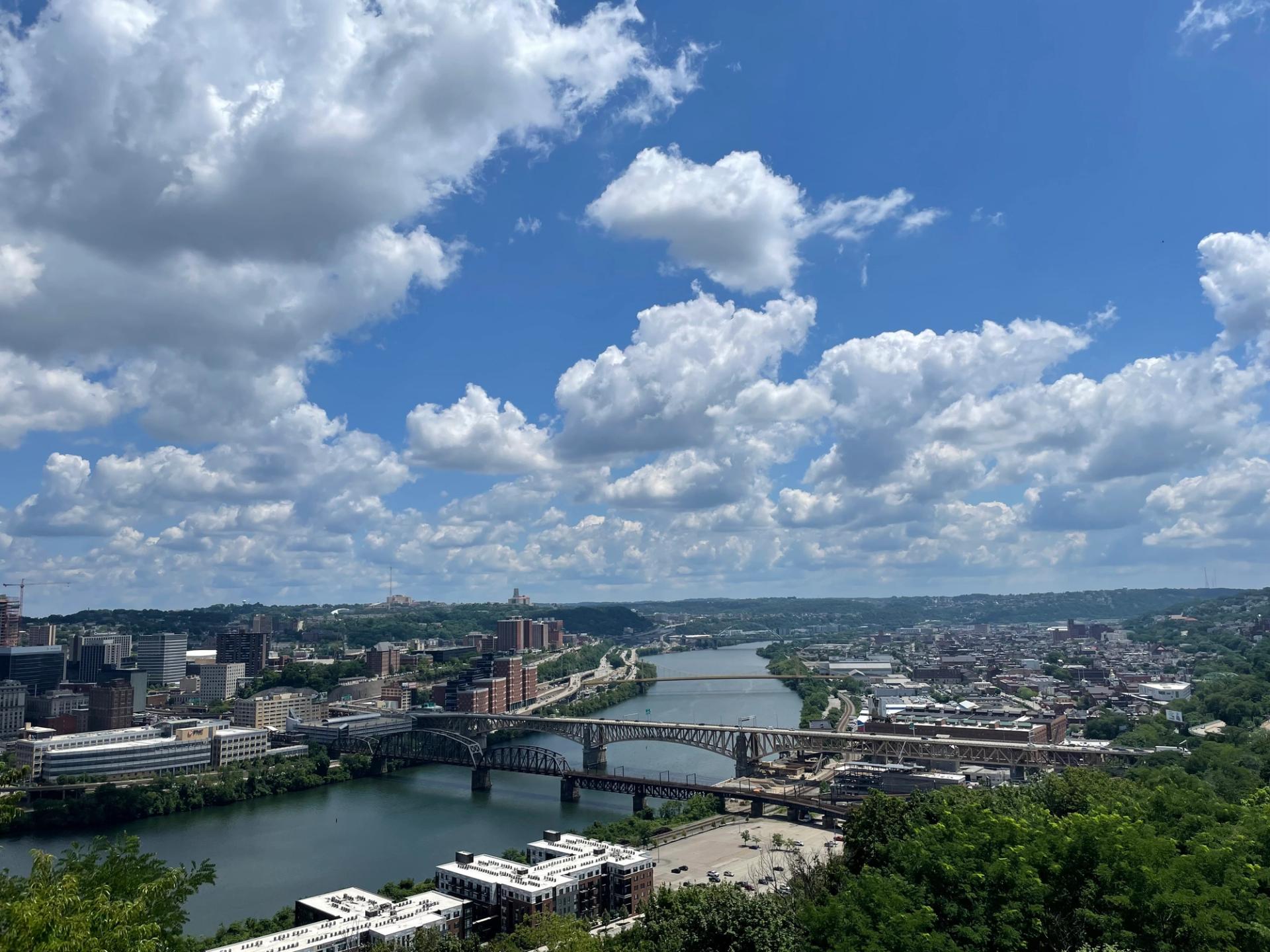
All the focus on swimming in the Seine River for the summer Olympics in Paris had me wondering if taking a dip in one of Pittsburgh’s rivers would really be such a bad idea. Take a gander down the rabbit hole — aka Pittsburgh’s sewer system — with me and decide for yourself if you want to take the plunge.
💩 What’s in the Water?
You couldn’t have Pittsburgh without the Allegheny, Monongahela, and Ohio rivers, but city water means city pollution. The 1972 Clean Water Act holds industrial polluters accountable, but their discharge still enters the rivers. Pollutants harmful to humans and wildlife also find their way into the water through the transport of dangerous materials like oil and plastics.
But wastewater overflow is likely your biggest risk. During rainstorms, our combined sewer systems flood, spilling rainwater and sanitary waste into the rivers.
🌊 Before You Swim
Despite the concerns, the rivers aren’t unswimmable, as proven by one long distance swimmer and the Three Rivers Marathon Swim coming up this Saturday, Aug. 24.
If you’re set on taking a plunge, keep in mind:
- 🌧️ Recent rainfall: The dryer it’s been, the less overflow you have to contend with.
- 📍 Location: Swimming can be less risky upriver and away from the city center, but be wary of our locks and dams.
- 🐟 River current: They may seem serene, but rivers can have a dangerous undertow.
- 🩹 Open wounds: It’s not a good idea to swim with any fresh cuts. If you do, make sure they’re covered to protect against bacteria.
Before taking a dip, check out 3 Rivers Watch and their helpful 2024 Swim Guide data, as well as ALCOSAN’s sewer overflow advisory programs to get a sense of current contamination levels.